
A Photo Journey to Spain’s Ancient Cities By Photographer and Contributor Tim Truby
I do a lot of photo trips. Traveling and shooting photos are my retirement jobs. And when I go somewhere like Spain, I treat each location as a the basis for a serious photographic study. That means going when the light will be perfect and working a spot. And occasionally I come away with an image that’s worth submitting to a South Bay gallery owner. … But mostly I head out with camera in hand for the sheer pleasure.
This would be our first real trip to Spain. And the thing that really drew me to Spain was the ancient cities of Seville, Cordoba, Granada. These cities had centuries as the center for the Moorish kings and centuries during Christian Spain’s time of great conquest and wealth.
Our starting point was the famous Alhambra, Granada’s palace, fort and garden complex, virtually unchanged since the 13th Century. Alhambra is one of Spain’s premiere tourist attractions … and the ultimate spot for exploring architectural photography.
The Alhambra
The Alhambra is up the hill from old town Granada, guarded by the old fort. But Nasrid Palace is the crown jewel. The lower side of Alhambra offers an amazing garden.
The first spot of interest was the Courtyard of the Myrtles, a classic example of Moorish architecture.
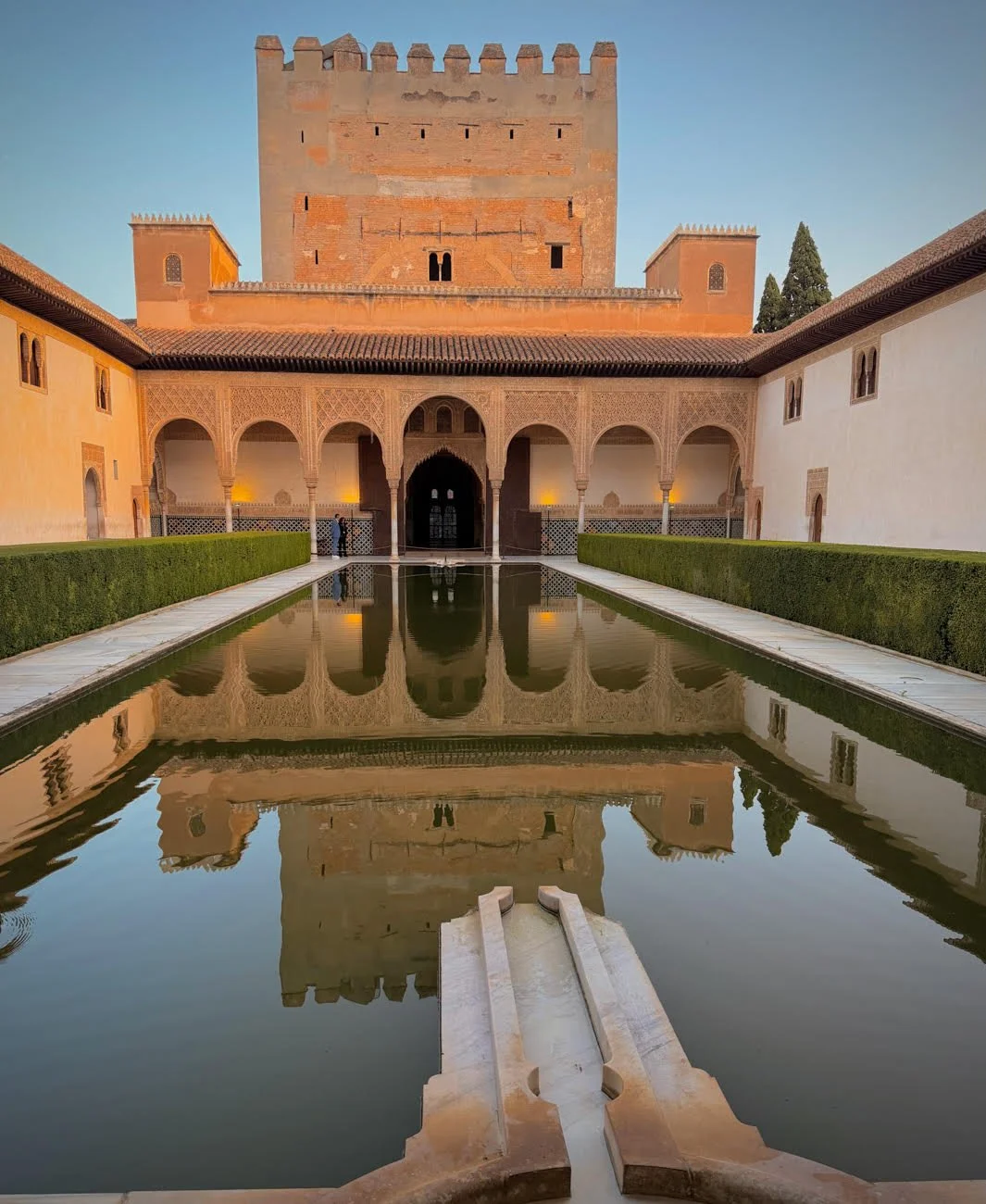
Courtyard of the Myrtles, Alhambra
I did a centered architectural shot, playing off the building’s reflection. On a historical note, during the sultan's time, the rooms on the courtyard’s left and right side were devoted to his harem.
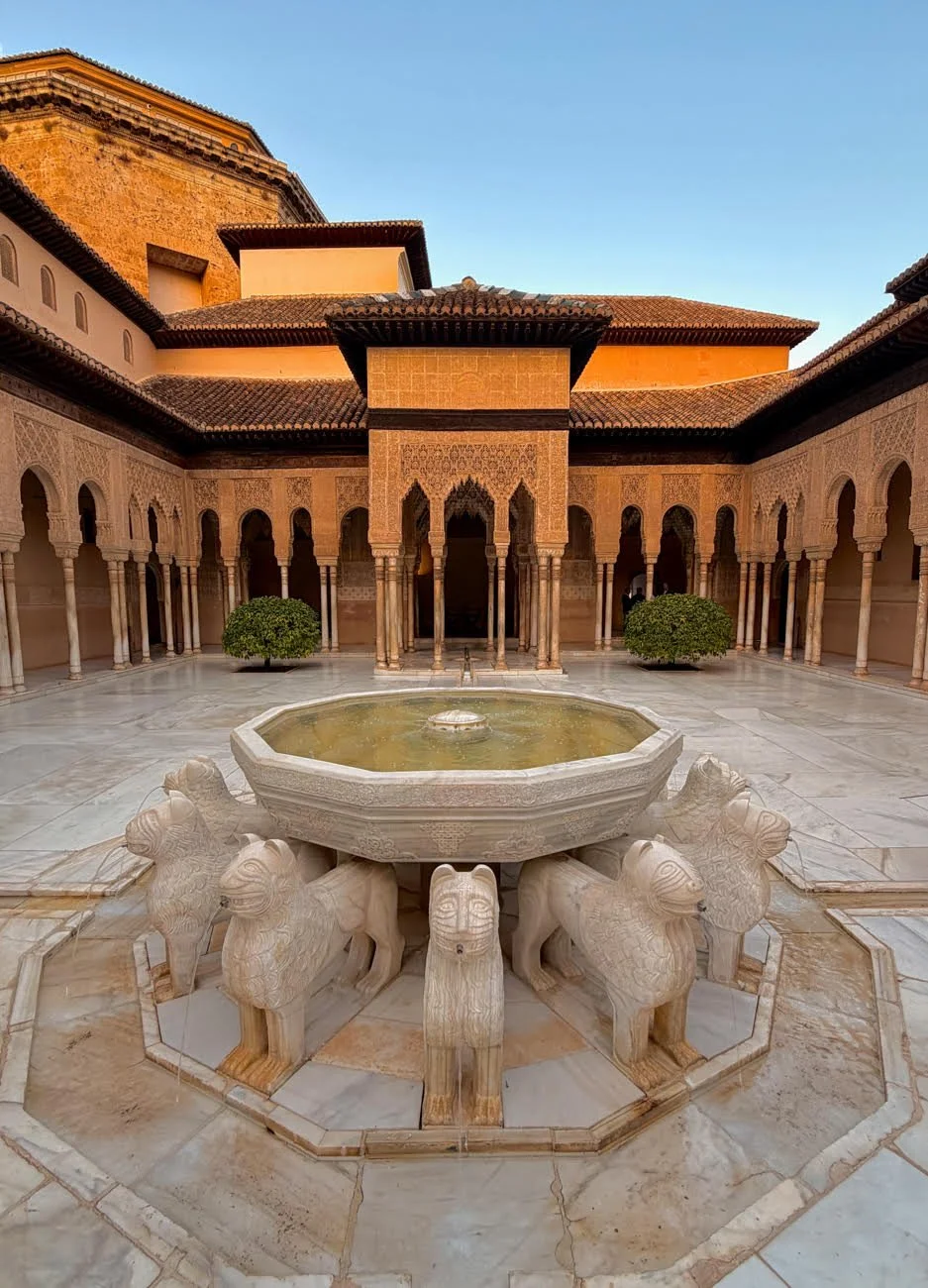
Courtyard of the Lions
The circle of lions is more of the more distinctive fountains you’ll find.
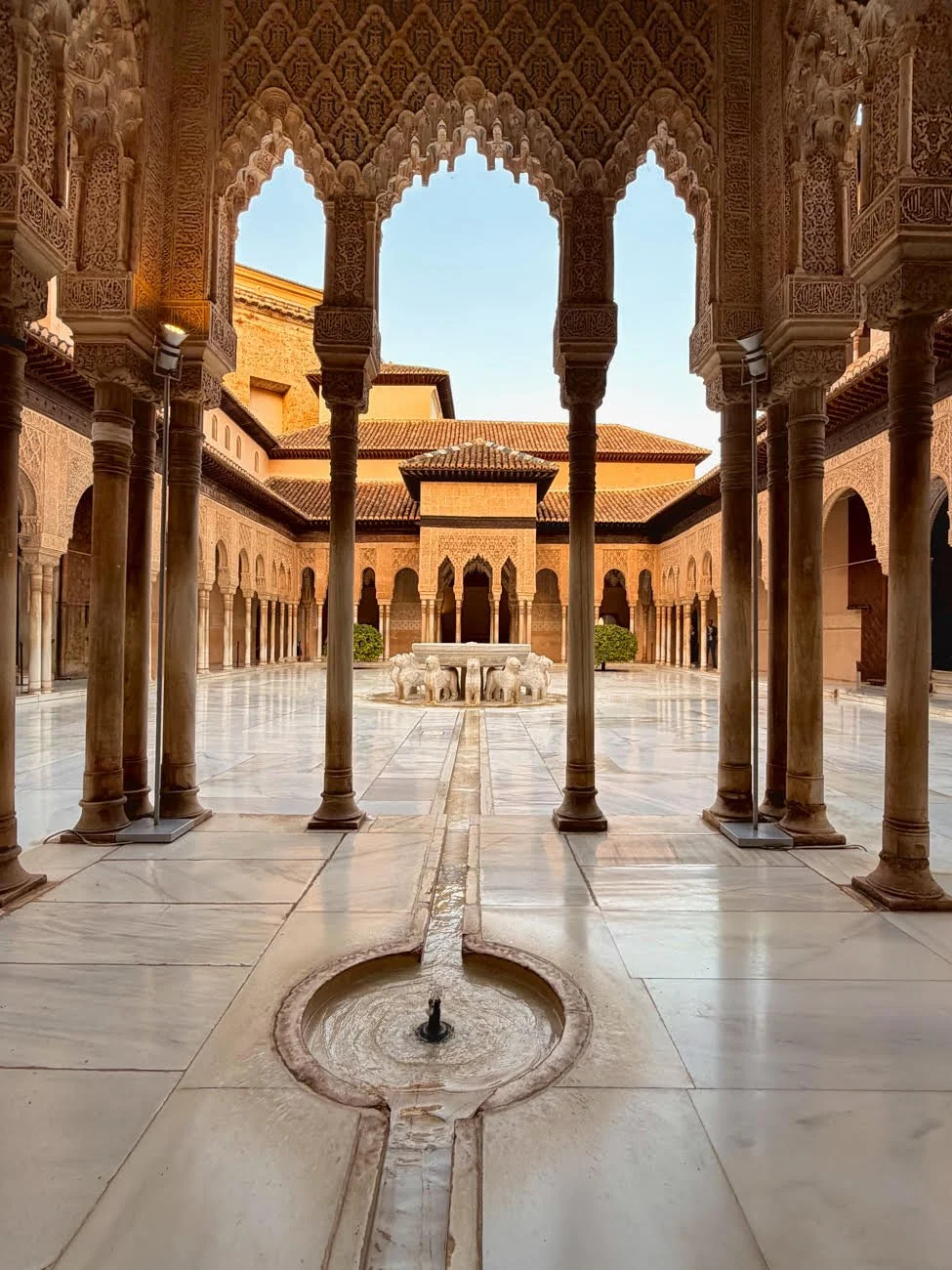
Courtyard of the Lions, #2
Viewing the fountain from the opposite perspective.
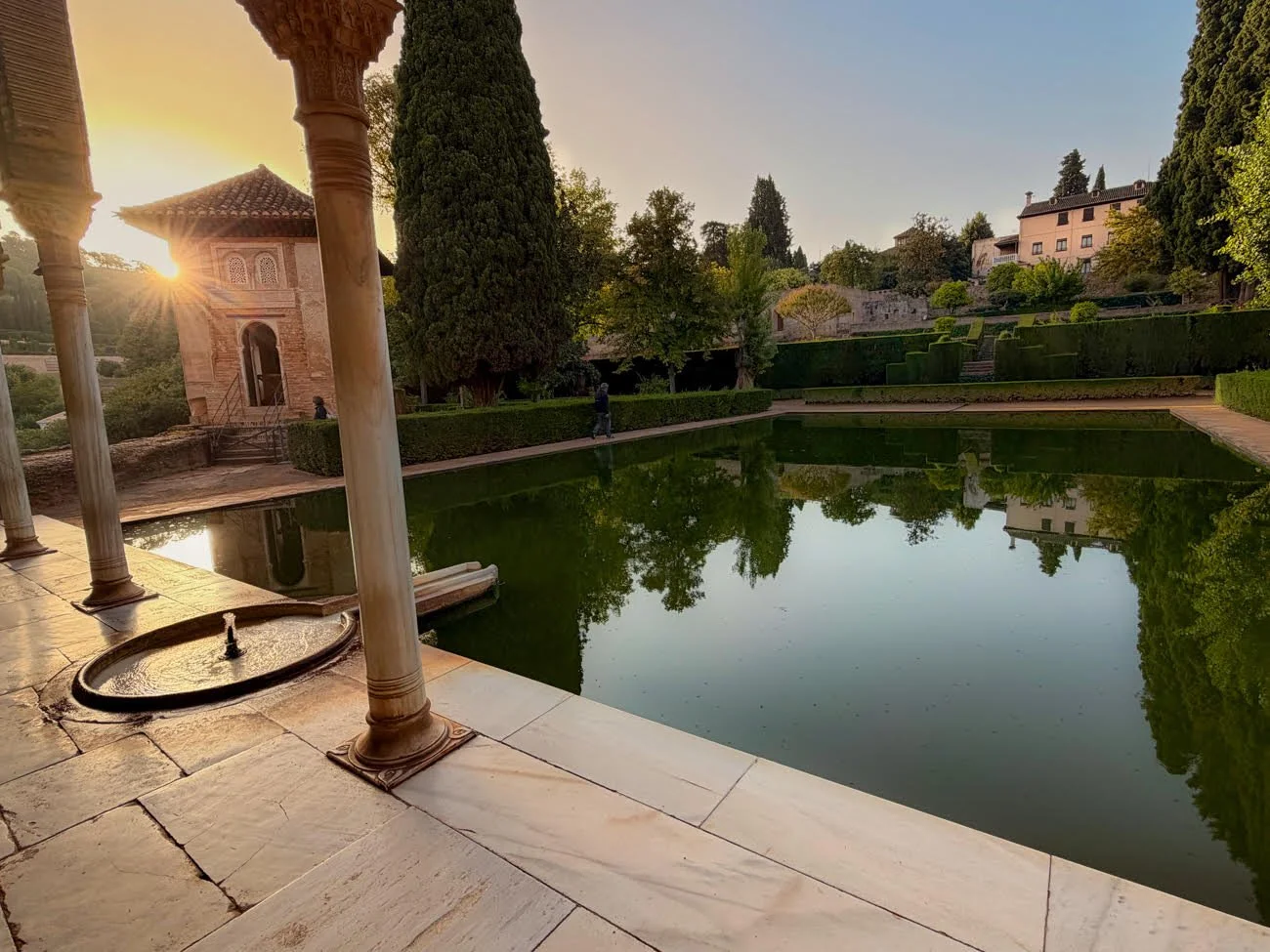
Reflecting Pool, Alhambra
On leaving Nasrid Palace, you end up at the reflecting pool and the garden area.
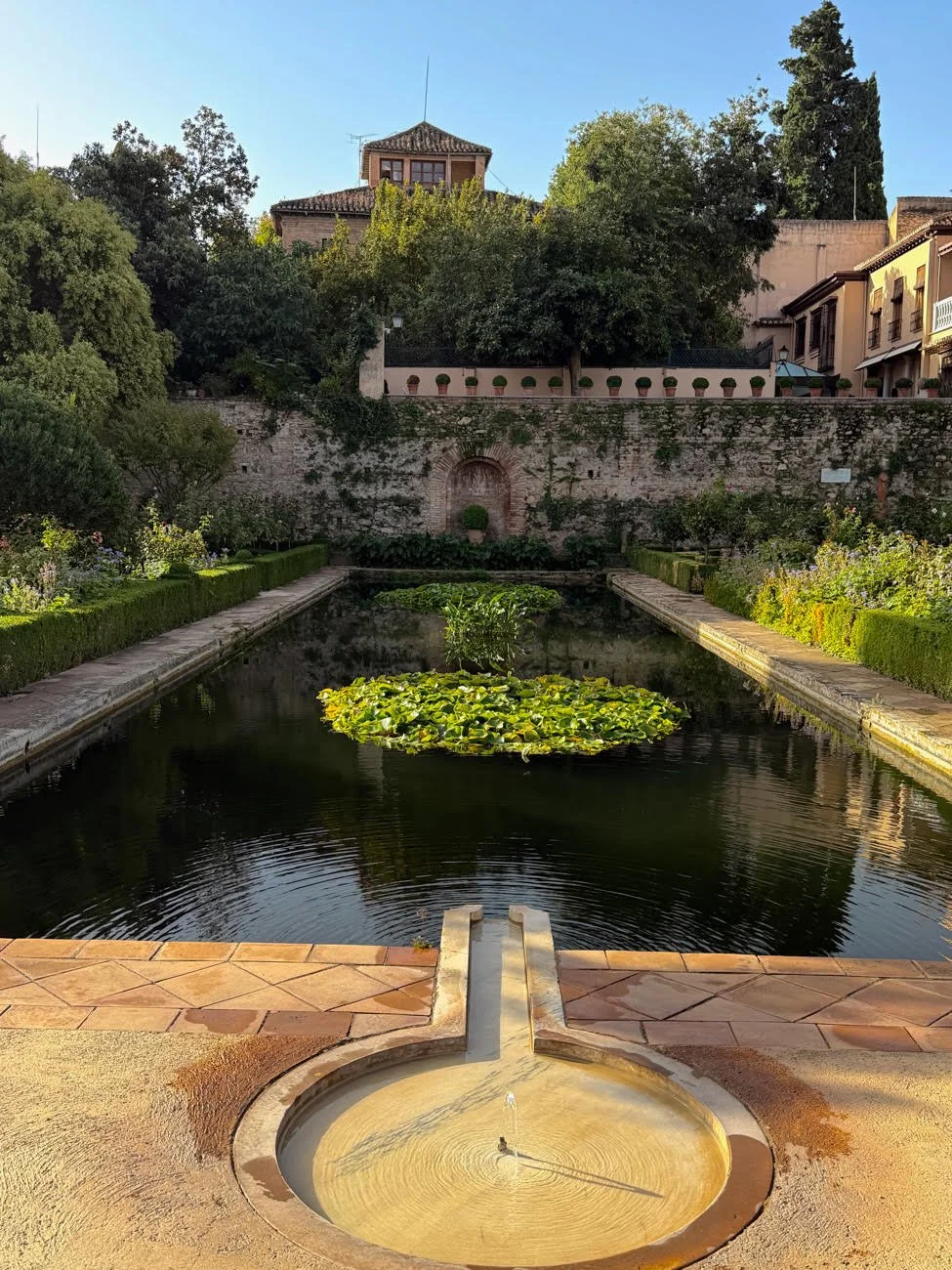
Lily Pond, Generalife Gardens
This spot was asking for a formal composition. Alhambra’s garden has lots of spots with equal beauty.
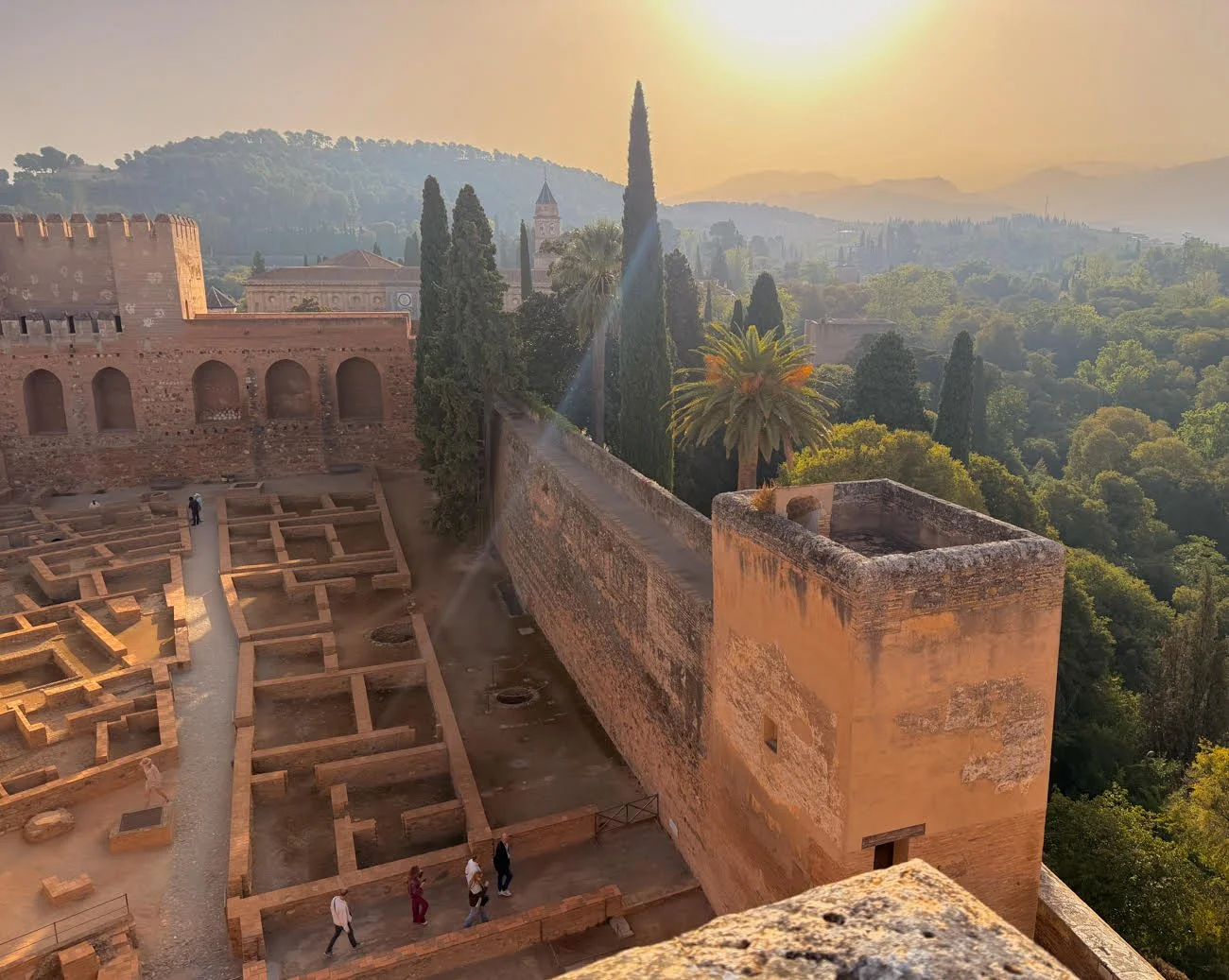
Alcazaba Fort, Alhambra
There was a fort here going back to Roman times. But this is how Alcazaba was in 1400. During the height of the Moorish period the fort provided security for 2,000 residents of the Alhambra.
Note for travelers: These locations are some of the most popular in Spain so online registration is required – and should be handled well before your trip. Once at the website, choose which half hour you want. When the day arrives, you’ll line up and enter with the (many) other tourists.
The Mezquita, Cordoba
Cordoba, just northwest of Ganada is the second jewel of Moorish architecture. During Moorish times, the Mezquita was a huge mosque famous for its arches.
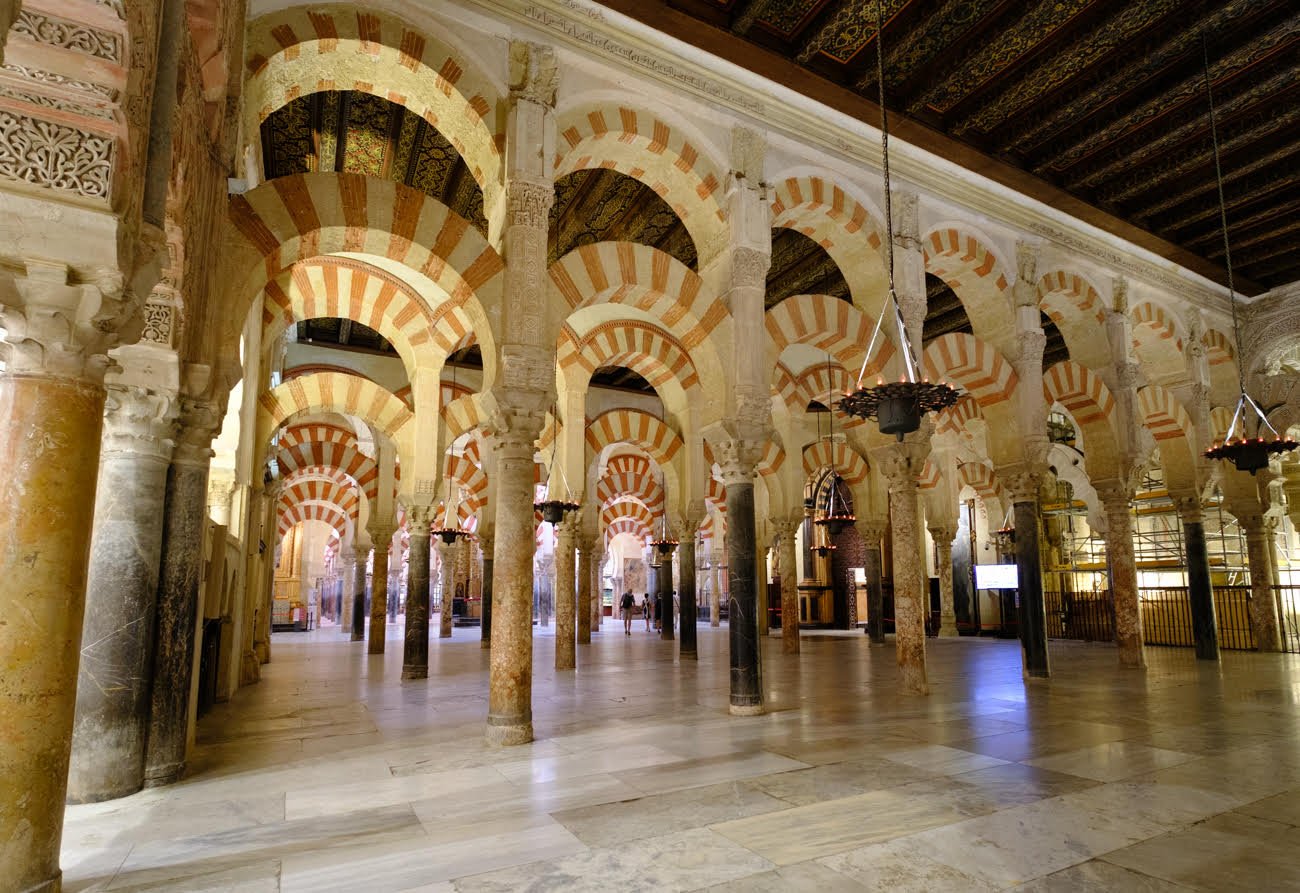
Arches of Mezquita
With the Christian conquest, the Spanish did something smart. Instead of the common practice of knocking over the mosques to build a church, they added a church altar in the center of Mezquita’s arches and filled the rooms on the periphery full of religious paintings.
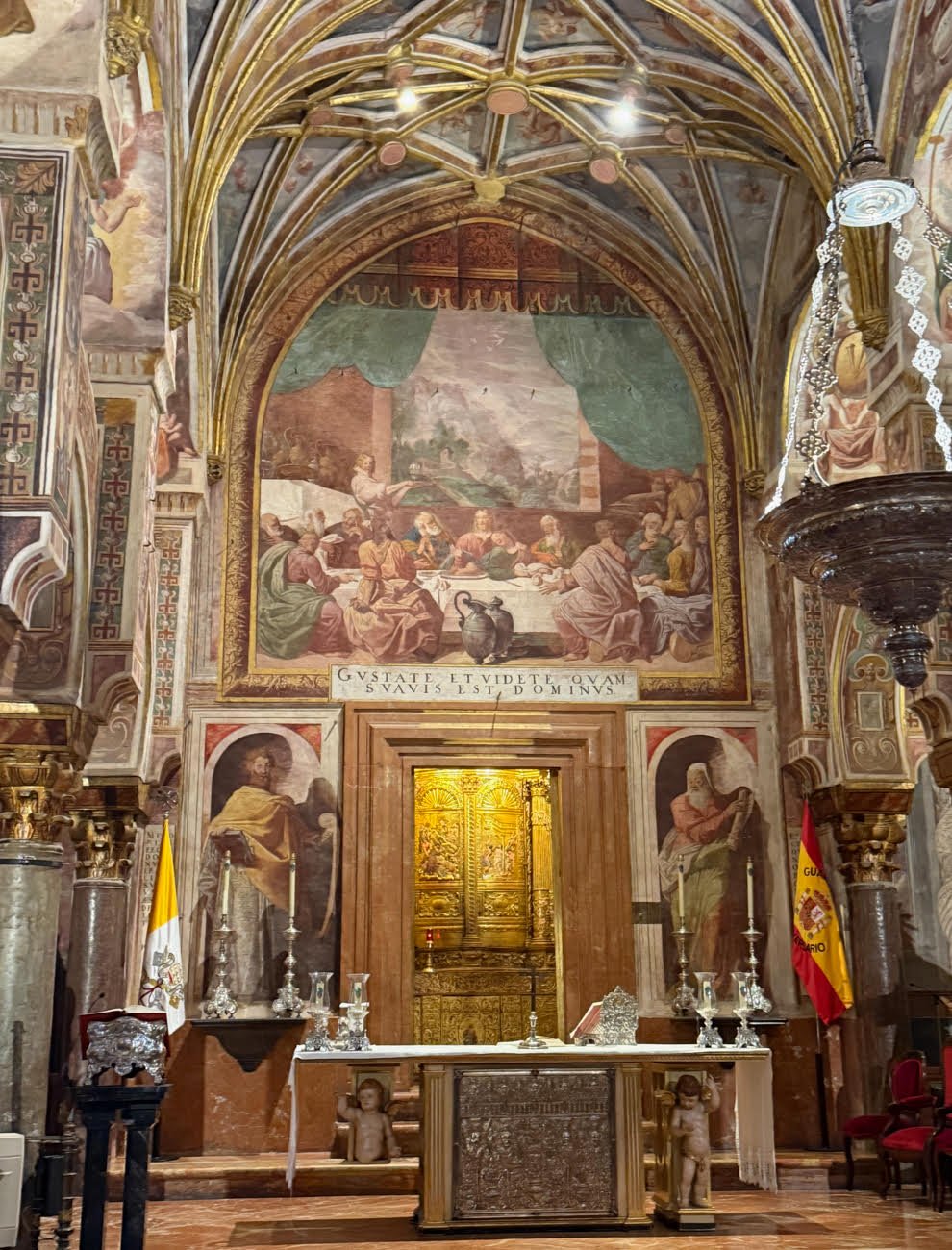
Mezquita Altar
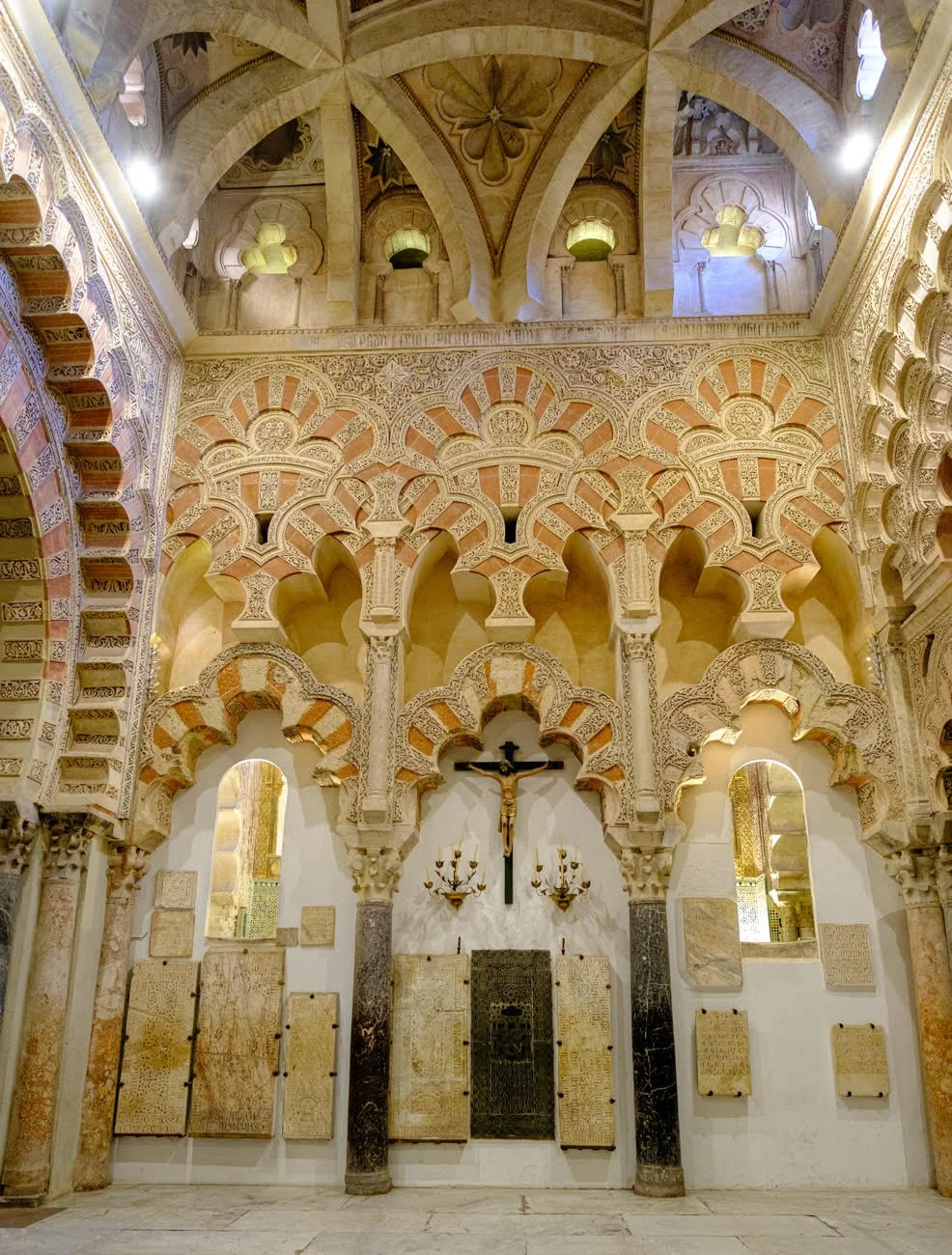
Mezquita Church Façade
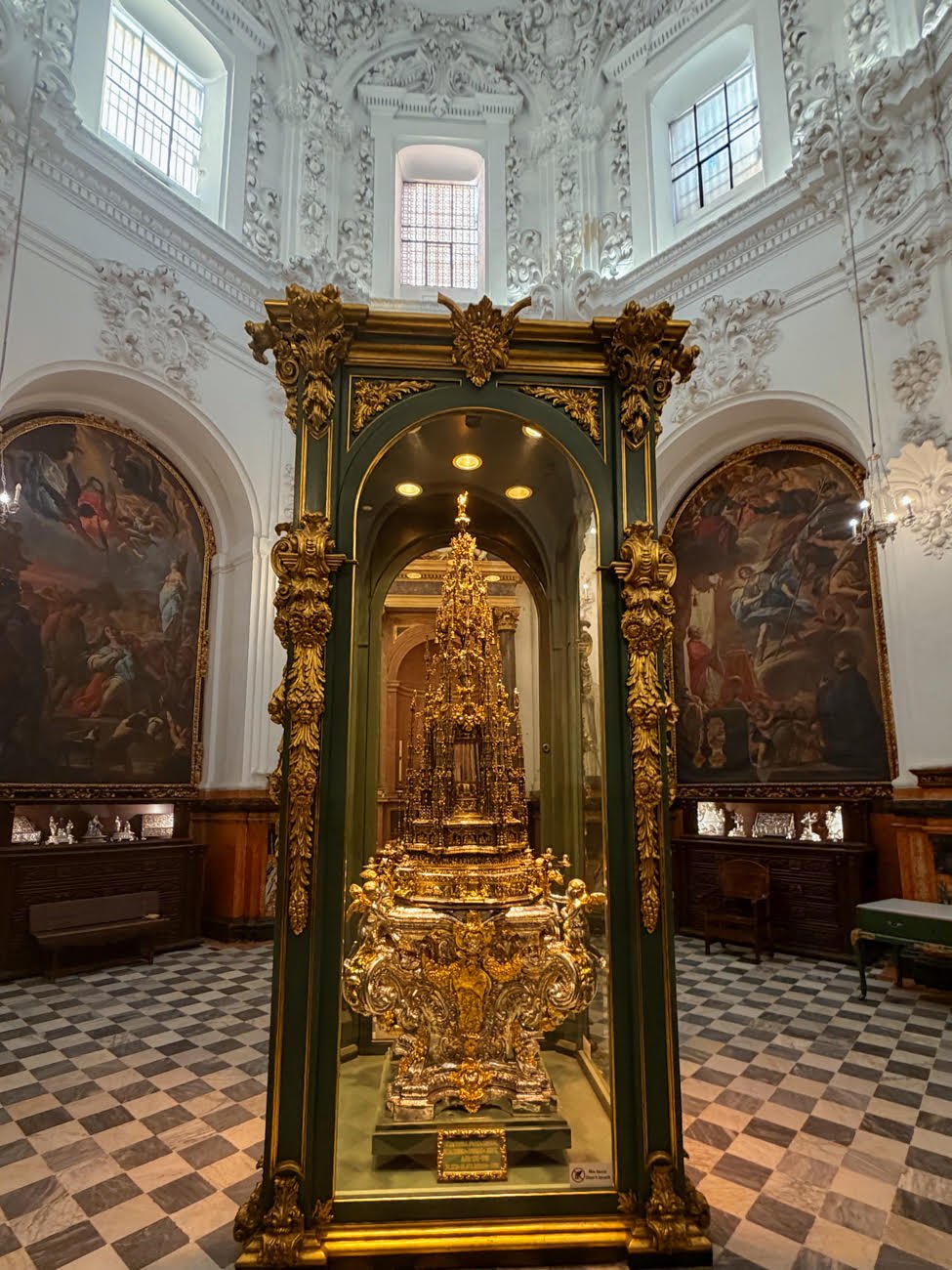
Mezquita Side Room
The Mezquita is an intriguing architectural choice, a smart blending of Moorish and Christian architecture and religious elements.
Seville
The third city in Andalusia was our favorite. Seville was Spain’s capital during Moorish times – and during the Christian era until the capital moved to Madrid. It's home to a magnificent cathedral, the world’s largest church in gothic style. And not surprisingly, the church was built within the Seville mosque

Night, Seville Church
The church also made use of the mosque’s tower, only replacing its top section with a classic cathedral bell tower.
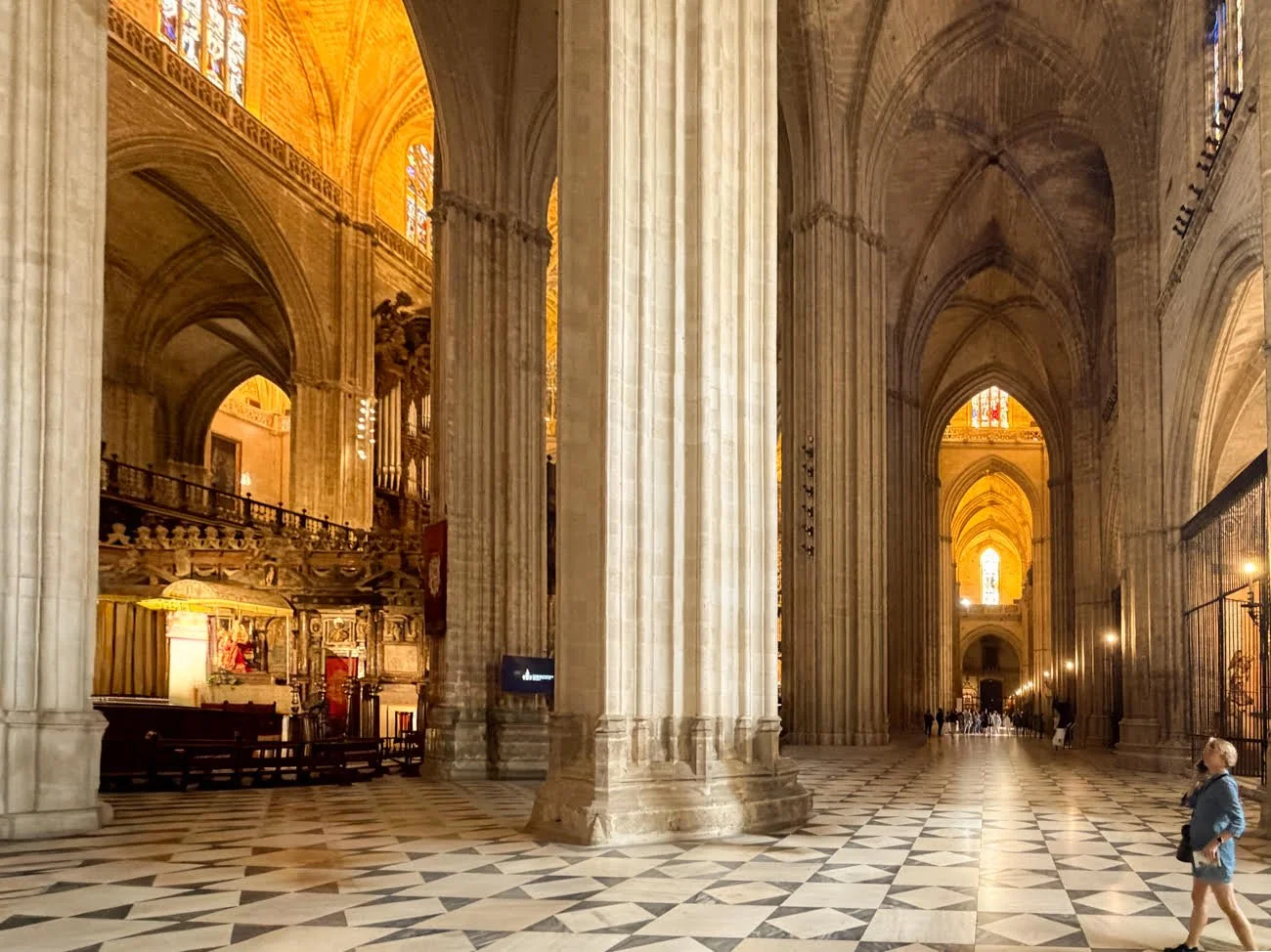
Entering the Cathedral
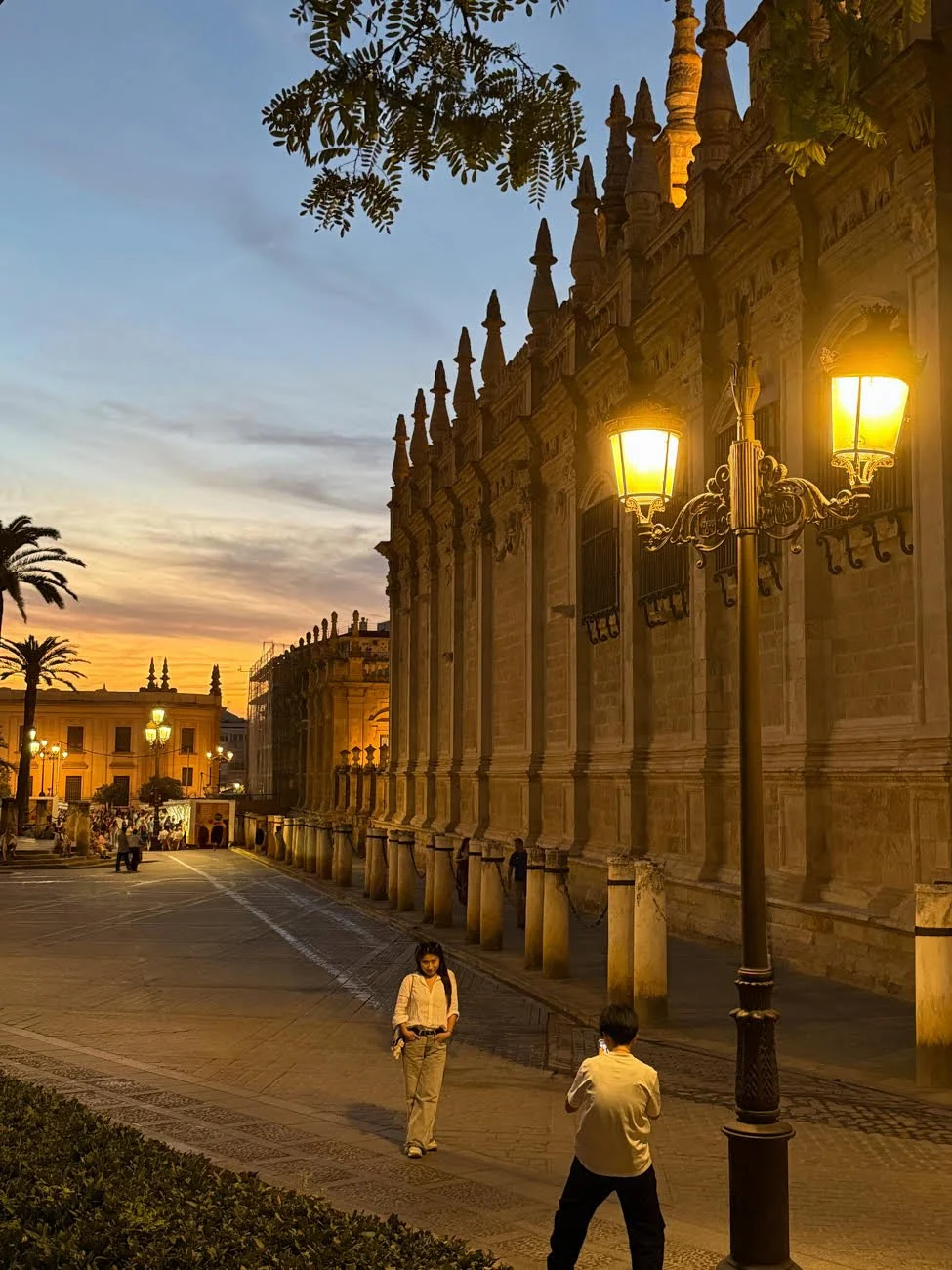
Cathedral at Sunset
Another spot worth seeing in Seville, Plaza de Espana.
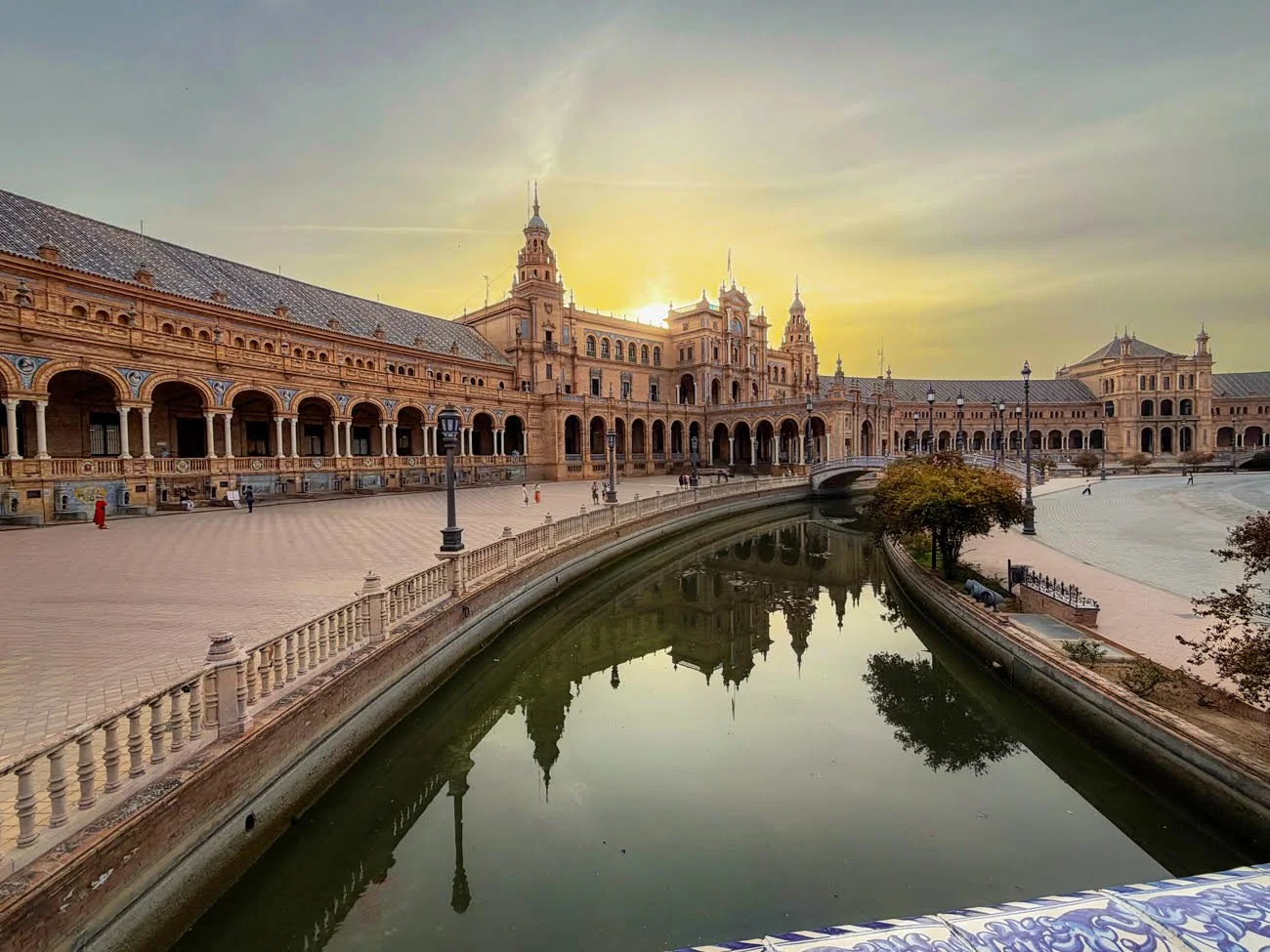
Early Morning, Plaza de Espana
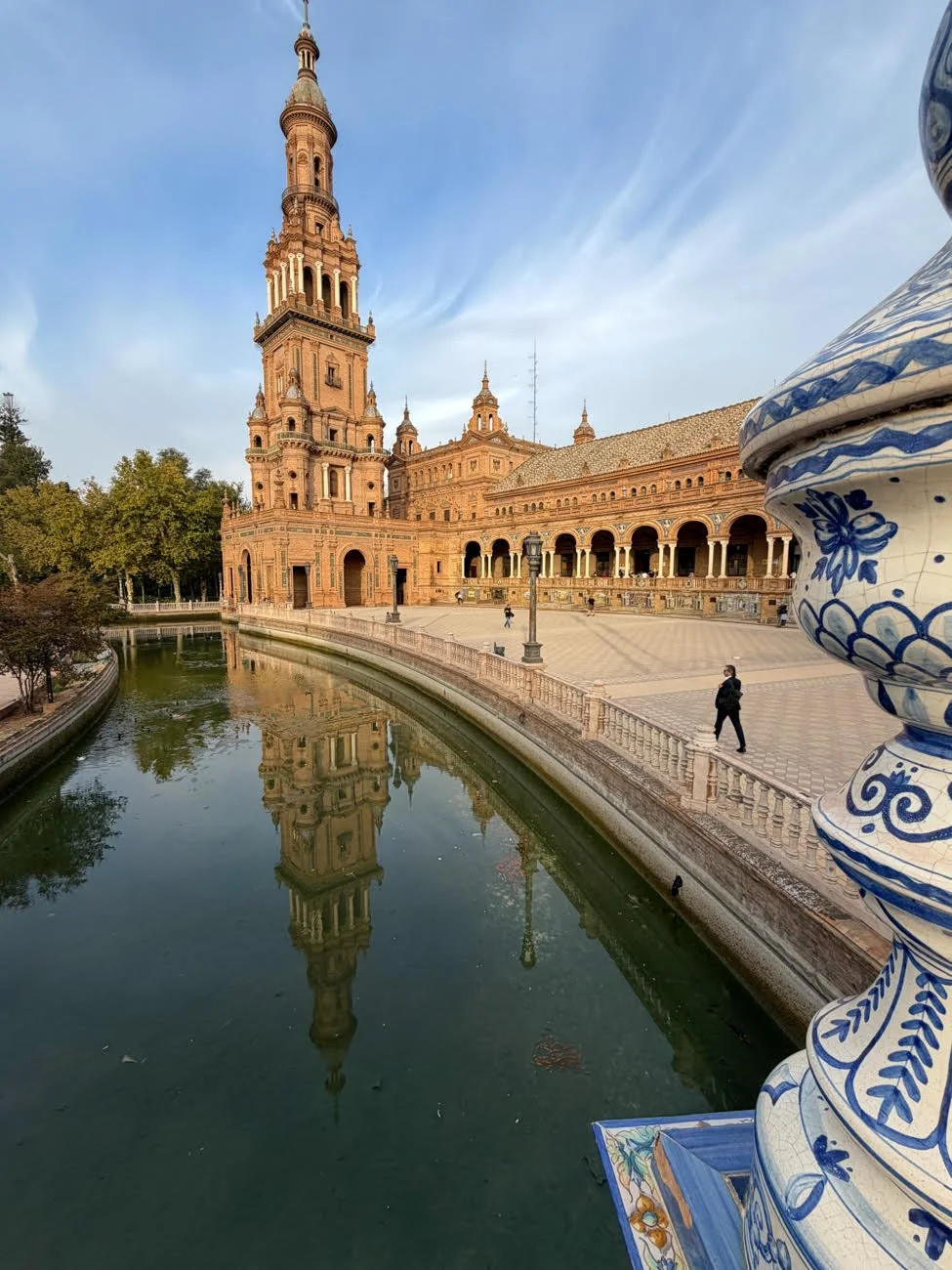
Plaza de Espana #2
Royal Alcazar, Seville
One of Europe’s most distinctive palaces, Royal Alcazar was built by the Moors in the 10th Century and reconfigured by Muslim workers in the 1300s for the Christian King Pedro. So stylistically it makes full use of Moorish architectural touches. Parts of Alcazar are still lived in by the current Spanish royal family.
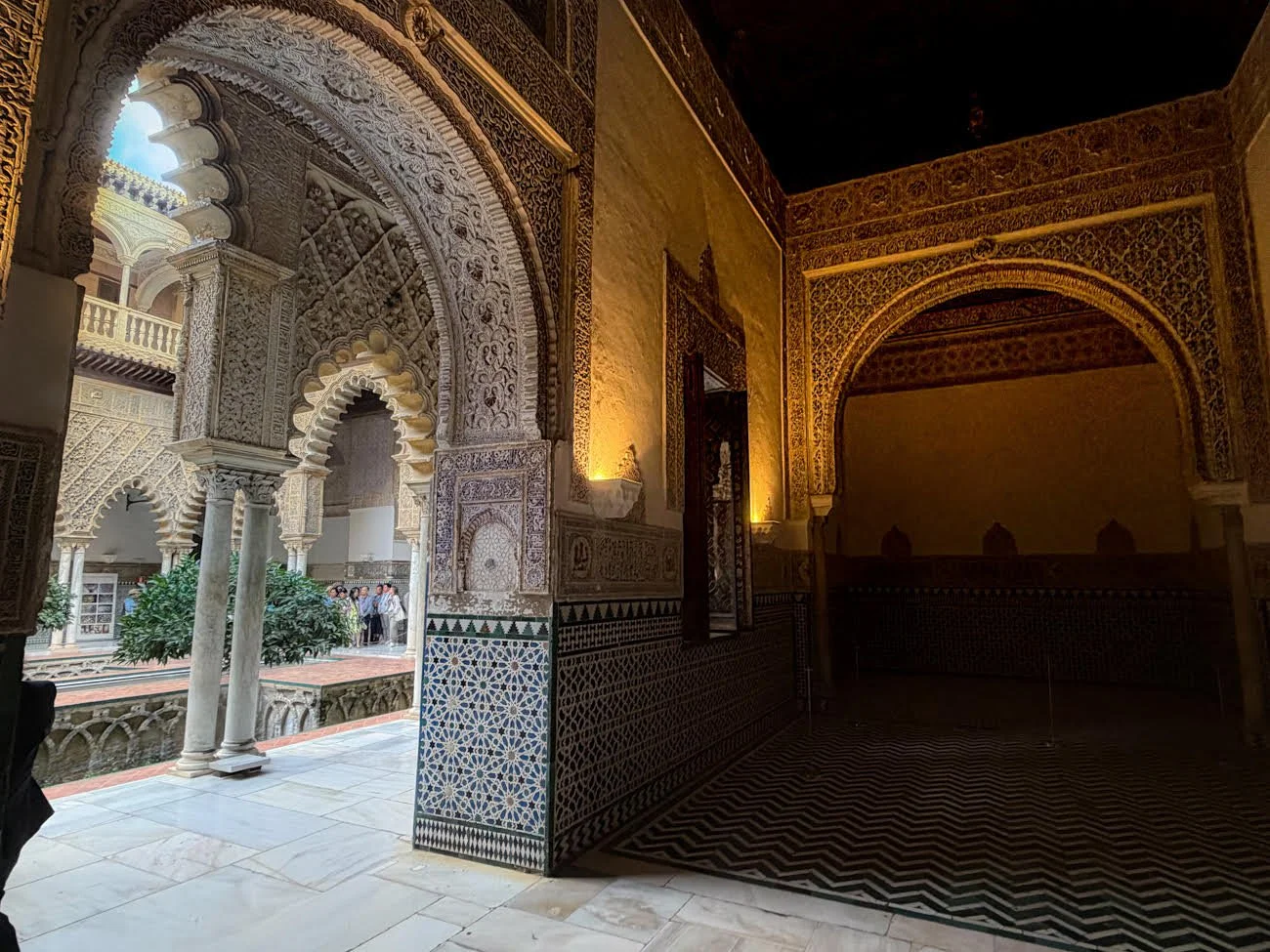
Interior and Exterior, Alcazar
The Moorish architects were masters at integrating courtyards with interiors to provide light and the cooling breezes. And with this image, I played with juxtaposing daylight and artificial light sources that is the result.
The Moorish architects also knew how to do distinctive doorways.
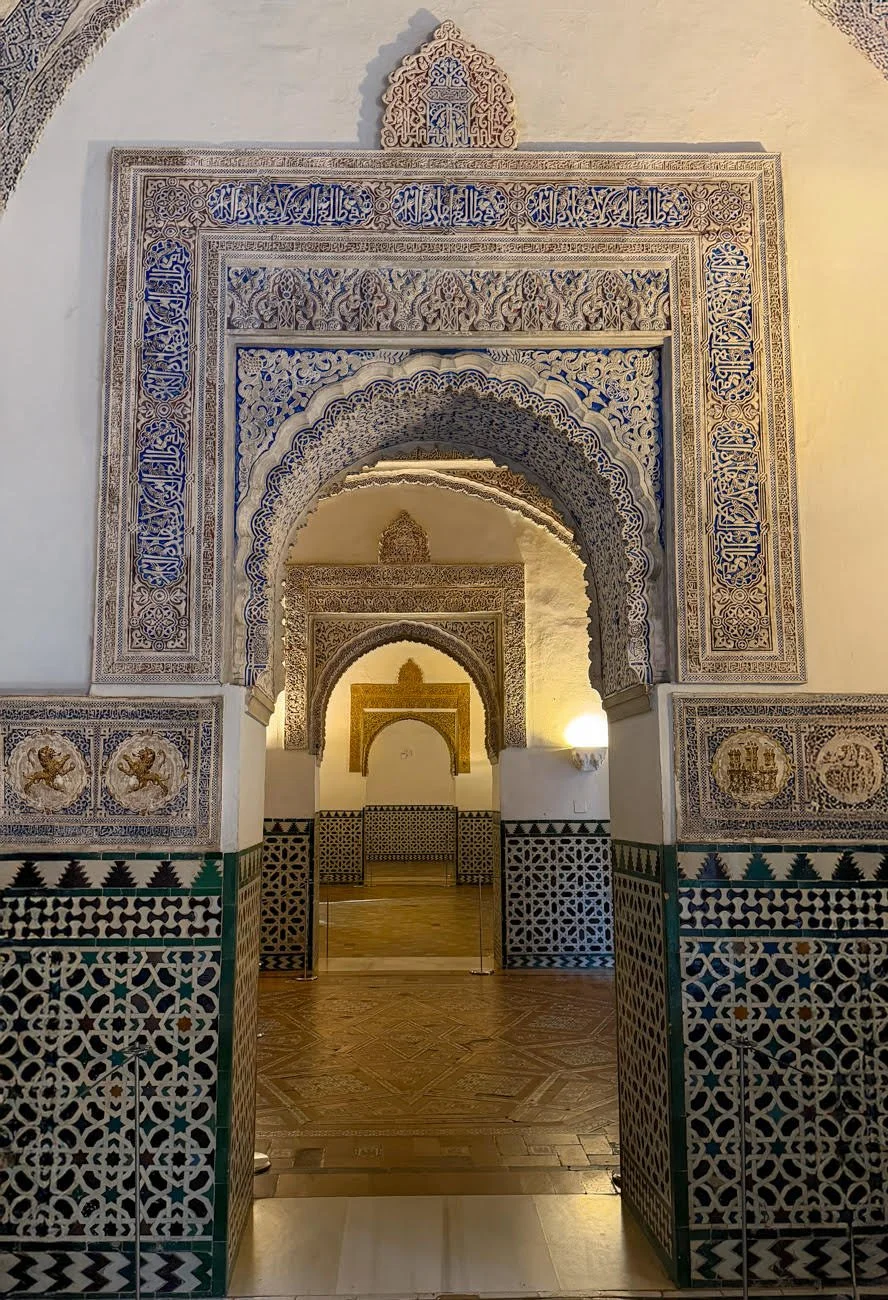
Moorish Doorways
Next to the palace is the entryway to the gardens and Mercury Pond.
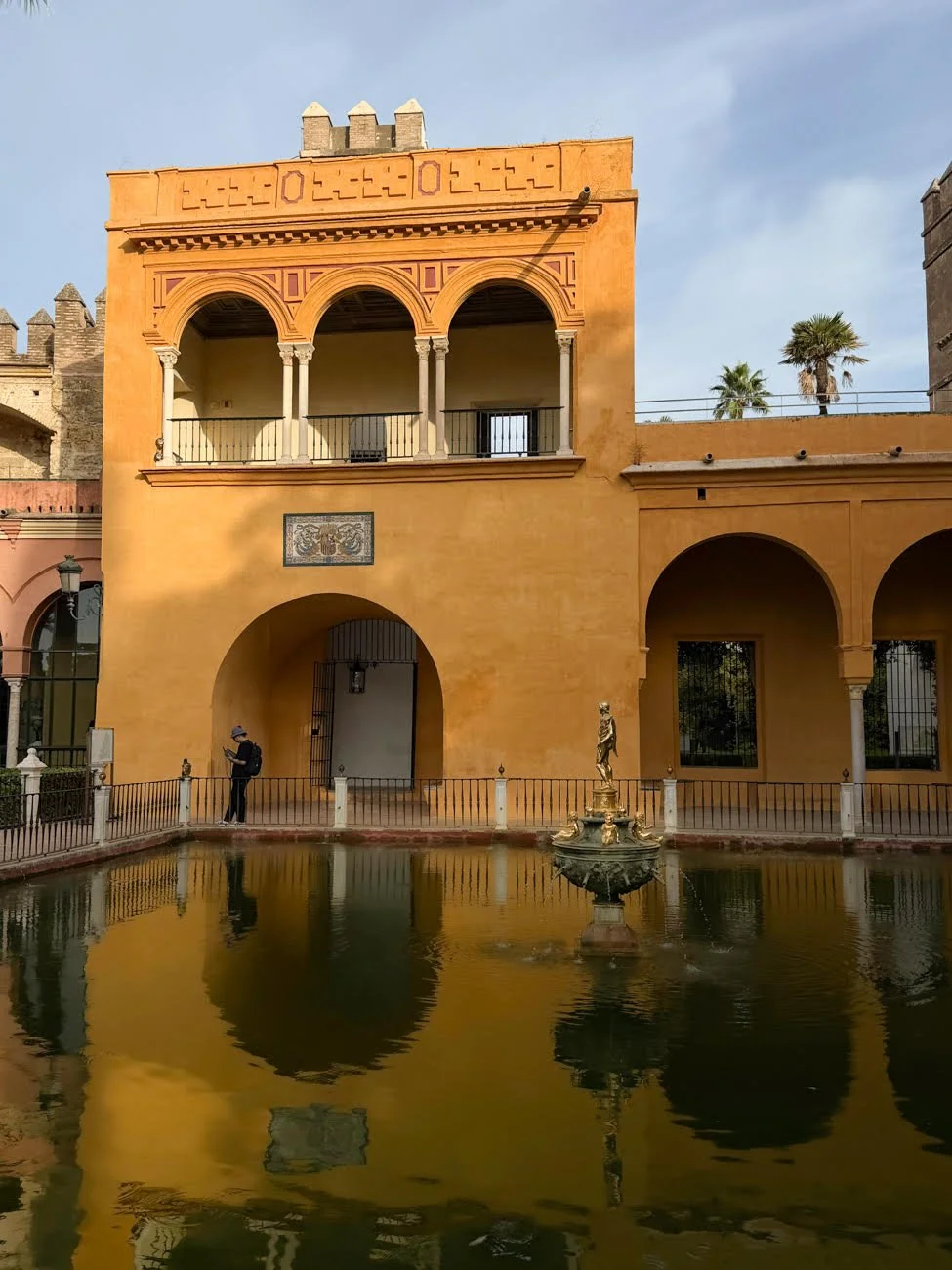
Mercury Pond, Alcazar
It's named Mercury Pond because the statue in the center is of the god, Mercury.
We also visited other parts of Spain, including Malaga, Madrid and Toledo. But you’ll have to see those spots for yourself.

My journey as a photographer began with an early love of national parks and travel. After college, I earned a Master of Fine Arts and spent a few years learning photo technique, composition, post production. Later I had two photography books published on the Utah National Parks.
My current focus is doing art shows (with several images chosen for Gallery of Hermosa, for PV Art Center, Peninsula Library and bG Gallery) and photo contests (20+ images in OC Fair, Spider Awards, European Photography Contest, etc).