
Placebo Effects By International Hypnosis Federation President, Author, Artist and More Shelley Stockwell-Nicholas, PhD

Mommy kisses a booboo and junior runs off smiling...This is the placebo effect in action. A smile orchestrates internal consciousness that cascades feel-good chemicals to your entire self. This naturally transforms a kiss, word, thought, ritual, or sugar pill into something beneficial. Your expectation brings about desired results.
Even a bogus surgery (for example, if an incision made with no “therapeutic” intention) is offered, and you believe it, it benefits you with results it said that your mind influences your body. In other words, what you expect, believe and associate has an effect that self-generates the outcome.
Study-after-study proves that the inner laboratory of your mind triggers chemistry. A placebo effect is self-hypnosis and suggestion. Mind performs alchemy and your body is your alchemical wizard! Hypnosis offers effective placebo effects. A placebo makes you feel better EVEN when told, “this is a placebo!”
NOCEBO EFFECTS: With every “diagnosed” and professionally labeled “medical problem” comes an overlay of fear, anxiety and stress. The reverse of a placebo is the nocebo that negatively influences your perception and anatomy. If you feel grossed out by TV drug commercials that show happy smiling users while a list of disgusting side effects are read, it’s the nocebo effect in action. A nocebo could be as simple as a negative remark about a bleak condition can bring about a real problem.
PLACEBO IN MEDICINE: In 1799 physician, John Haygarth, penned; “Imagination is a cause and cure of disorders” my father, Elisha Perkins attributed to his metal tractors and animal magnetism and now my wooden tractors are equally effective according to single-blind clinical trials. My “Perkins Wooden Tractors remedy draw disease from the body [and pain relief] for 4 out of 5 people with rheumatism.”
When no morphine was available Henry K. Beecher used the power of thought to help those wounded on the battlefield in WW II. The medical journal “Lancet” coined the term “placebo” in the 1920’s.
In words of medical doctor E.L. Rossi: “The physiological changes that follow accepted suggestions defy explanation by contemporary medicine.” Placebos for wellness is clinically proven to by-pass pain and discomfort, elevate your mood and even reverse dis-ease. The word “placebo is Latin meaning “I shall please.” Positive belief is the foundation of the placebos given at clinical drug trials that evoke actual changes in the body.
HYPNO-ANESTHESIA SCRIPT
Al Krasner, PhD, uses a waking placebo approach and says: “I will drop ‘sensodine 7’ which is a standard chemical used by doctors, to irritate the skin for tests, to the back of your hand. This will make your hand very sensitive to the touch... So sensitive in fact that with the slightest touch, you will want to move your hand from me.” (Then he drops water on their hand.) “How powerful that chemical is.” Then, he waits a minute and gently touches the hand and, says,“I will replace this now with an amazing, even more powerful drop called ‘topical anesthesia 8’ which is used by doctors to numb an area completely. This will make your hand so completely numb that nothing bothers it in the least.” (He then drips another little drop of water on their hand) “This completely numbs your hand now.” And it really does… That’s why hypnosis is so effectively used in dentistry and surgery with no chemical anesthesia necessary.
There could be a down-side if you get hooked on placebos; “I had a psychosomatic ailment, got addicted to a placebo, went through withdrawals, and now I’m a hypochondriac.”
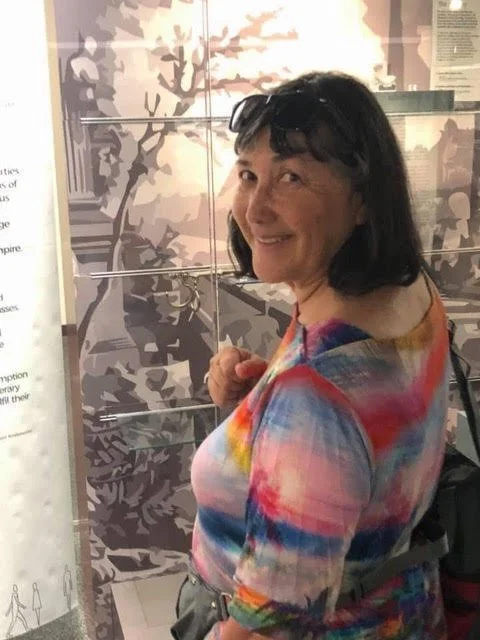
Local Personality, Shelley Stockwell-Nicholas, PhD is a hypnotherapist, mindfulness and NLP trainer, artist and the author of 25 books. She certifies practitioners through the International Hypnosis Federation. You can call her at 310 541-4844. Website: https://www.hypnosisfederation.com/